A Rewatch Built Around One Actor’s Hands
A rewatch of one actor’s hands reveals how repeated gestures, pauses, and changing contact with objects shape a character’s presence in a scene.
The common mistake in a rewatch of one actor’s hands is treating every movement as a clue to decode. That can shrink a layered performance into a single guess about what a character feels. Instead, watch how the hands occupy the scene: what they touch, how long they stay there, and what changes when another person enters.
Choose a character and a viewing question
Pick one character in a film you already know. Give the rewatch a question with a visible answer: when do this performer’s hands enter the frame, what do they handle, and how does that handling change from scene to scene?
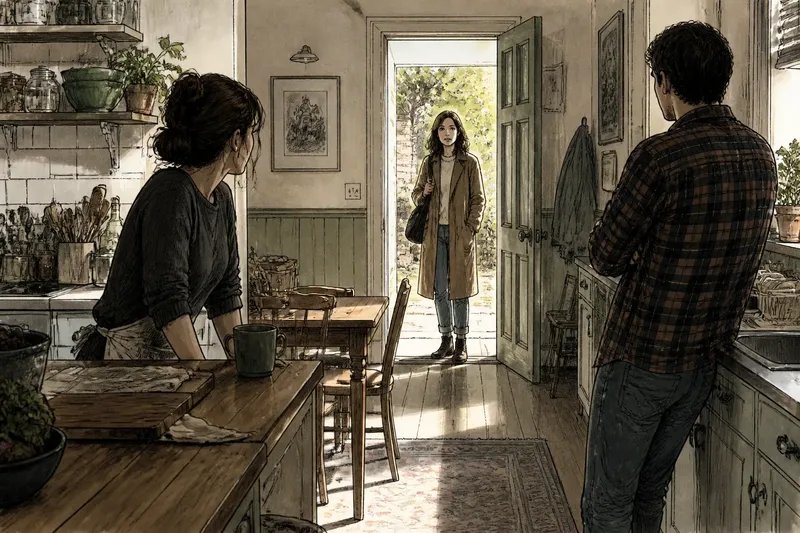
A film with recurring places or objects makes comparison easier. A kitchen table, a work counter, a coat, or a letter can return in different circumstances, letting you notice how the performer’s contact with the same setting shifts. If the character’s hands are often outside the frame, that limitation is useful too; it draws attention to what the film chooses to show and withhold.
Follow contact rather than assigning emotion
On the first viewing, note visible actions in plain language: “sets the spoon beside the bowl” or “keeps one hand under the table.” Avoid converting an action into a feeling before the scene gives you grounds to do so. This keeps the performance in view rather than turning each gesture into a diagnosis.
Attend to the physical relationship between hand and object. Does the character lift, turn, pass, fold, push away, or leave something untouched? Is the contact brief or sustained? These details can make a scene feel careful, abrupt, or routine without proving a specific emotion.
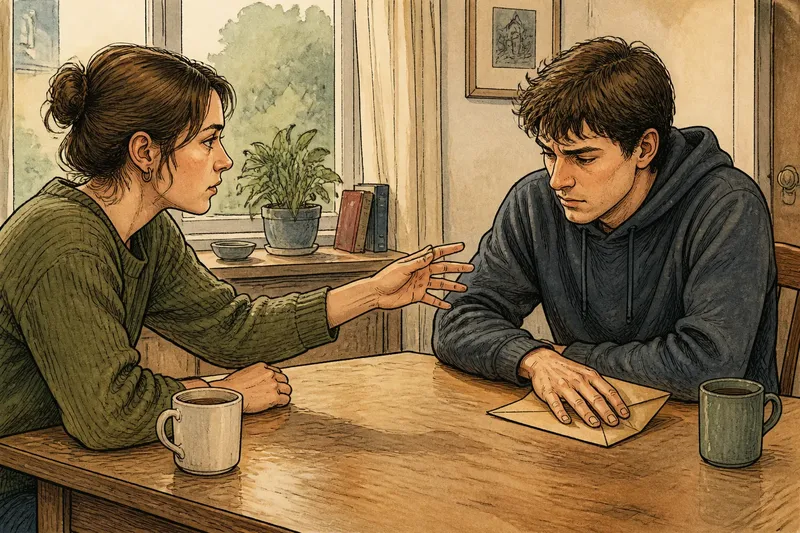
Stay with the whole exchange. A hand can respond to another performer, a prop, or the shape of the space. Notice who initiates contact, who holds an object, and whether the action changes after a line or interruption. The scene’s arrangement may matter as much as the gesture itself.
Compare how a repeated action meets different situations
When an action recurs, compare its circumstances instead of treating it as a fixed symbol. A character may fold a napkin at dinner, smooth a sleeve before a meeting, or turn a key while waiting. The movement belongs to a particular moment, and its effect depends on what else is happening around it.
Make a compact record of the scene, the object or surface involved, and the hand action. You can add one note about what changes in the surrounding situation: another person arrives, a conversation stops, or the character moves from a public room to a private one. That gives your later comparison something concrete to work with.
- If the same object appears in separate scenes, compare how the character picks it up or sets it down; if the handling changes, revisit the surrounding action before deciding what the shift suggests.
- If a movement repeats at different points in a conversation, note what happens immediately before it; if the timing changes, compare the dialogue or interruption rather than assigning a new meaning at once.
- If the character touches another person, record who initiates and who withdraws; if the exchange differs from earlier contact, look at the relationship and circumstances shown in those scenes.
- If a hand stays still while the character speaks, note its position and what it rests on; if the pose changes later, compare the framing and action rather than assuming the stillness signals one emotion.
- If an expected gesture does not appear, note the scene in which it is absent; if the difference seems significant, check whether the setting, blocking, or available props have changed.
- If the hands disappear from view, mark where the frame cuts them off; if you cannot assess the gesture, limit your reading to what the film makes visible.
Read stillness as part of the blocking
A hand at rest still occupies a position in the scene. Compare a palm laid on a tabletop with fingers curled around a glass; then look at the space between the character and the other people or objects. The pose may help organize the image, even when no gesture stands out.
Notice the transition into and out of stillness. A hand might begin to reach, pause, and return to the body, or remain on a letter while another character speaks. The timing and framing shape what you can see. A cut that hides the hand does not establish what happened outside the frame, so keep the observation to the image presented.
Hands are one element of a performance, not a replacement for the face, voice, or body. Set a visible action beside the dialogue, the other performer’s response, and the scene’s blocking. That comparison can support a richer reading without reducing the gesture to a secret code.
Imagine Mara returning a borrowed tin
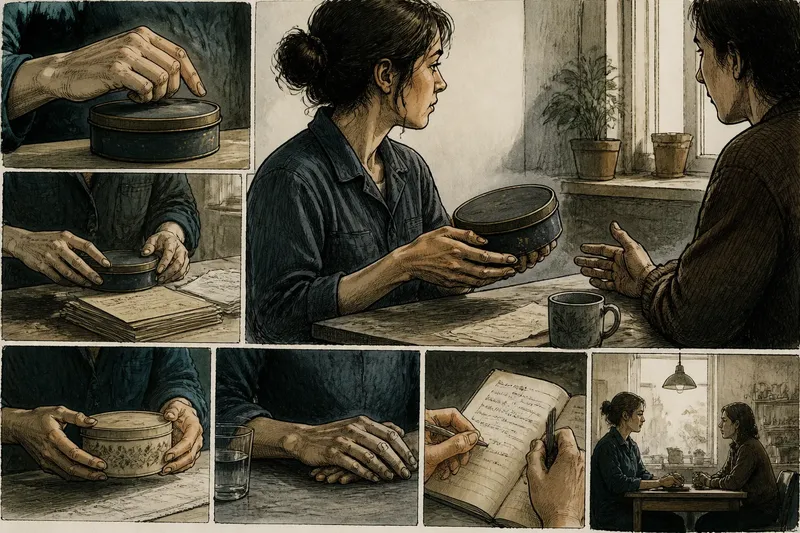
Imagine an invented film about Mara, a night-shift clerk returning a borrowed tin to her neighbor. In their first exchange, she taps the rim with one fingernail while the neighbor speaks. Your note is simply “taps tin rim during neighbor’s line,” not “feels guilty.”
In a later scene, Mara handles the same tin alone: she turns it once and places it beside a stack of mail. You record the changed action as “turns tin, sets it down; no tapping.” Near the end, her neighbor offers a different container. Mara accepts it with both hands, pauses, and sets it on the table. Together, these notes give you a specific comparison: tapping during conversation, measured handling alone, and a pause before setting down a new object.
That sequence does not settle what Mara feels. It does give you a basis for asking whether the changing contact belongs to the relationship, the different objects, or the practical business of returning and accepting containers. Compare the scenes’ dialogue and blocking, then keep more than one reading if the film supports them.
How can you keep notes without missing the scene?
What should you write down?
Use a short description of the action, the object or surface, and the scene. “Folds note before answering” captures visible information; a label such as “afraid” jumps to an interpretation. Save that interpretation for a later comparison.
What if the hands rarely appear on screen?
Note when they enter or leave the frame, and whether an object or sleeve obscures them. If the film does not show the action, do not infer what happened beyond the image.
Should you pause or replay a scene?
Let the first viewing run if note-taking distracts you. Afterward, replay a scene when you need to compare timing, framing, or the order of actions; use the pause button sparingly so the performance retains its rhythm.
Can the same gesture change its effect?
Yes: the surrounding action can make a repeated movement feel different without changing its physical form. Compare the people, objects, and blocking in each scene before settling on an interpretation.
Use the notes to shape a second viewing
After the film, group the observations by action—holding, folding, reaching, passing, or withdrawing. Choose one recurring action and revisit the scenes where it occurs. Compare the surrounding people, props, and blocking, then ask what the film makes visible in each moment.
For a rewatch of one actor’s hands, the most useful result is not a verdict about what every gesture means. It is a clearer account of how the performer handles objects, shares space, and changes the physical terms of an exchange. Keep one note about what remains outside the frame, too: that boundary can be part of the scene’s design.