Close-Up or Medium Shot for a Two-Person Conversation?
Choose a close-up or medium shot for a two-person conversation by matching the frame to what viewers need to notice: expression, gesture, or relationship.
The common mistake in choosing a close-up or medium shot for a two-person conversation is assuming the tighter frame will make every exchange more dramatic. It can sharpen a glance, but it may hide the hand covering a letter or the other person’s response. That missing context can leave viewers with a vivid face and no clear sense of what changed.
A close-up centers a face; a medium shot usually leaves more of the body and interaction visible. Neither has a fixed emotional meaning. Choose by identifying the scene’s decisive information: a shift in expression, a physical gesture, or the relationship between both people.
Choose a close-up when a facial change carries the beat
A close-up helps when a small change in expression matters more than surrounding action. A smile that falters, a glance toward the door, or a hesitation before an answer may be difficult to read if the actors occupy little of the frame.
That can be useful when the dialogue remains polite while its meaning shifts. A character says, “That’s fine,” but avoids the other person’s eyes. The close framing gives viewers a better chance to notice the mismatch without asking the actor to make it broad.
The tighter crop also removes information. It can hide the listener’s posture, the speaker’s hands, or the distance between them. A person looking away might be ashamed, impatient, or simply concentrating; the rest of the scene may help distinguish those possibilities.
Use a medium shot when gestures and distance matter
A medium shot can hold a speaker’s words alongside a listener’s folded arms, a hesitant hand, or a change in distance. The audience can attend to behavior as well as expression.
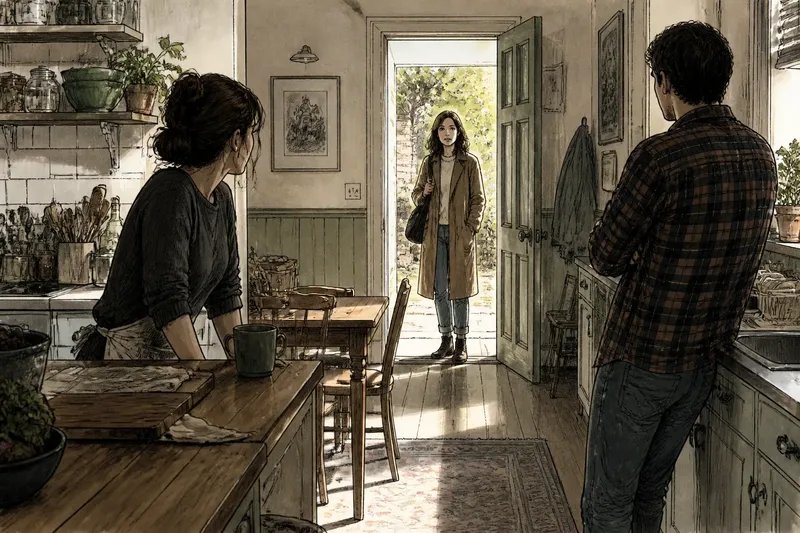
Space itself can shape a conversation. Two people sitting shoulder to shoulder on a bus have a different physical relationship from two people separated by a kitchen counter. A medium composition can show who has room to move, who is hemmed in by furniture, and whether either person closes the gap.
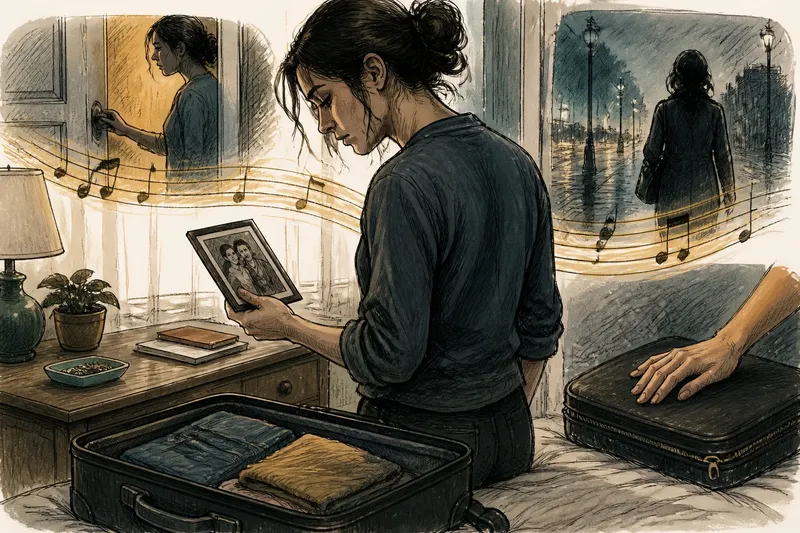
Choose this framing when physical business carries the scene: one character packs while answering a question, or two people keep shifting their chairs to avoid facing each other. A close-up might clarify a face but cut away the behavior that gives the exchange its shape.
Identify the scene’s decisive visual information
Before choosing a frame, name what viewers need to see in the next beat. If it is a fleeting change in someone’s eyes, a close-up may make it legible. If it is a hand withdrawing from a shared object, or two people reacting together, a medium shot may preserve more of the evidence.
If both a gesture and a reaction matter, consider establishing their positions in a medium shot, then moving closer when one response becomes the focus. A cut should mark a change in attention, not simply arrive with the next line. Staying in a medium shot can let an uncomfortable pause gather; moving into a close-up can give one person’s response new weight.
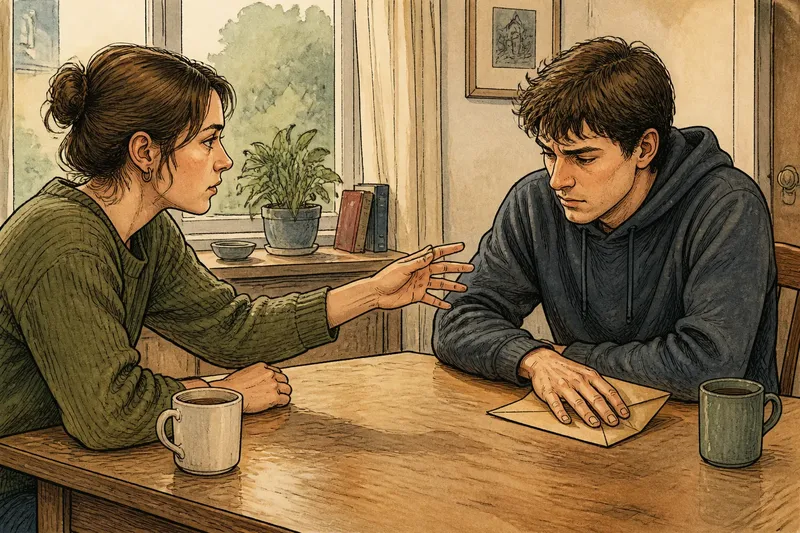
Say two siblings sit at a dining table. One asks whether the other kept a family letter; the listener’s hand rests over the envelope, and the speaker reaches across the table. The scene’s inputs are the covered envelope, the reaching hand, and the listener’s face. A medium two-shot keeps all three visible, so the viewer can see the reach meet resistance and read the face at the same time. If the director instead chooses a close-up on the listener before the reach, the fleeting expression becomes clearer, but the covering hand and the sibling’s action disappear. The tradeoff is plain: choose the medium shot if the conflict lies in the competing gestures; choose the close-up if recognition on the listener’s face is the beat, and show the letter’s position elsewhere before the cut.
Keep both people visible when their relationship is the subject
A two-person scene can concern the bond between characters, not just one person’s feelings. A medium two-shot lets viewers compare posture and timing directly: one character finishes a sentence as the other turns away, or both reach for a cup and stop.
A close-up changes the question. It directs attention toward what one person is experiencing rather than how both people behave together. That shift can suit a private realization, but it may obscure a simultaneous reaction that gives the moment its meaning.
Framing also affects whose account receives attention. A close-up on the speaker can temporarily make the listener unavailable to viewers. A medium shot leaves room to compare what is said with how both people receive it.
Check the movement and the room before tightening the frame
Actors communicate through small choices: a finger tracing a glass, a shoulder angling toward an exit, or a chair pulled closer. Check whether the important action begins or ends outside a close-up’s crop. If the gesture vanishes at the edge, viewers may miss the choice altogether.
The setting matters when it shapes the exchange. A narrow hallway, crowded booth, or desk between the speakers can explain how they relate. A medium shot may include enough of that arrangement without making the room the subject. If the setting adds little and the emotional change is concentrated in a face, a tighter frame can leave distractions behind.
Movement can change the choice mid-scene. If a character stands or crosses toward the other person, a medium shot can preserve the action and the response. A close-up may suit the expression at the end of the movement, but it can conceal how the other person reacts.
Which frame fits the conversation’s main visual task?
Which shot helps when a character hides a feeling?
A close-up can reveal a small conflict between the character’s words and expression. Choose a medium shot if the concealment lies in guarded posture, a withheld gesture, or distance from the other person.
Which shot helps when both people react at once?
A medium two-shot makes simultaneous reactions easier to compare. If one response is the turning point and the other can wait, a close-up can isolate the decisive face.
Which shot works when an object matters?
Use a medium shot if viewers need to see the object, the hands, and the other person’s response together. Use a close-up when a detail or hand movement is decisive, while establishing the object’s context elsewhere.
Which shot suits a long, uncomfortable pause?
A medium shot can make shared stillness and distance visible. A close-up can concentrate the silence on one person, especially if their expression changes while the pause continues.
Make every change in shot size serve a new purpose
When a scene moves from a medium shot to a close-up, ask what viewers can notice now that was harder to see before. Perhaps one person’s expression has become more important than the room, or the listener’s response has taken center stage. If the viewer’s task has not changed, the cut may feel restless.
The reverse move can reveal that another person’s reaction matters or that someone has taken an unexpected action. Opening the frame can restore the relationship and setting after a concentrated moment; it does not automatically mean the characters have grown distant.
Keep the physical geography readable. Track where each person looks, which side of the frame they occupy, and what their hands are doing before and after a cut. If a gesture or screen direction becomes hard to follow, viewers may spend attention reconstructing the room instead of reading the exchange.
Should the frame favor a face, a gesture, or the relationship?
- If the decisive beat is a subtle change in one face, then choose a close-up; if the other person’s simultaneous reaction matters too, use a medium two-shot.
- If a hand movement begins or ends outside the close-up crop, then widen to a medium shot; if the hand’s detail alone carries the beat, use a close-up and establish its context elsewhere.
- If viewers need to compare both people’s posture, then keep them together in a medium shot; if one person’s private realization takes over, move closer to that face.
- If a desk, counter, or narrow hallway shapes their distance, then include enough of the room in a medium shot; if the setting adds no useful information, tighten the frame.
- If someone stands or crosses the space and the other person’s response matters, then retain both in a medium shot; if the movement culminates in one important expression, a close-up can emphasize that end beat.
- If a pause depends on shared stillness, then hold a medium two-shot; if one person’s changing expression is the point, choose a close-up.
For a close-up or medium shot, state the detail the audience should catch and check that the chosen frame includes it. A glance may favor a close-up; a glance answered by a step backward may favor a medium shot. Let that concrete difference guide the choice, and viewers can follow the exchange without losing its ambiguity.