The Doorway Before the Cut: How Entrances Set a Scene in Motion
A doorway entrance can set a scene in motion before anyone speaks. Learn to read position, timing, and framing to see who holds power and why.
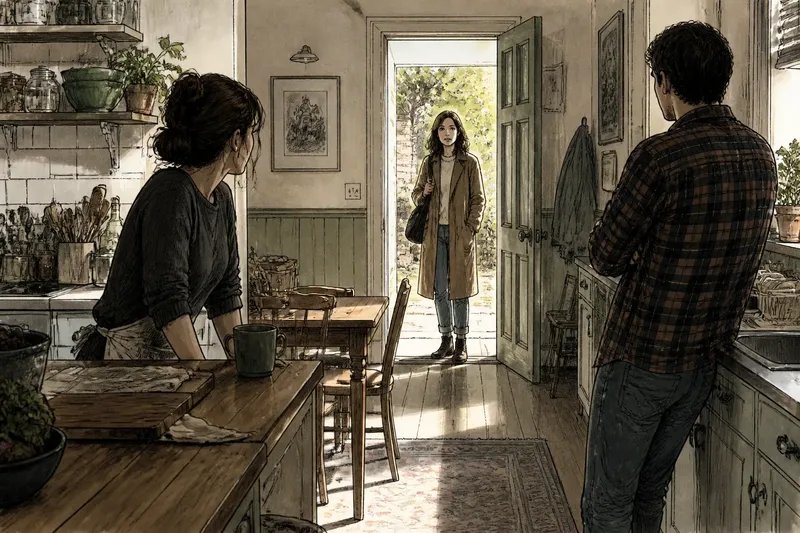
The most common mistake when reading a doorway entrance is to wait for dialogue to explain what is happening. That delay can cost you the scene’s first, sharpest clue: who feels entitled to enter, who has to make room, and what the camera lets us see before the cut. Watch the doorway as an active part of the image, not just a passage between rooms.
A character crossing a threshold can rearrange relationships in a breath. Someone already inside may turn toward the newcomer, block the path, keep working, or leave an empty chair untouched. Each choice changes the space before a line of dialogue can name the change. A short viewing routine over a week can make those choices easier to spot without turning every entrance into a puzzle.
Day one begins with the threshold
Choose one scene with a clear entrance: a kitchen, office, hospital room, train carriage, or another space where the doorway remains visible. Watch once without pausing. Then replay the moment just before the entrant appears and note three things: where the camera is, what parts of the room are visible, and who already occupies the frame.
The threshold itself is not always a literal door. It might be an archway, a curtain, a gate, or the edge of a room that the camera treats like a border. Ask whether the entrant is already visible beyond it, briefly framed before stepping through, or concealed until the moment of arrival. Early visibility can let the audience anticipate a reaction; sudden visibility can make the entrance feel like an interruption.
Keep your notes concrete. “The doorway is behind the seated character” is more useful than “the scene feels tense.” The first observation gives you something to check on another viewing; the second is a response that may come from many parts of the scene.
Day two tracks who owns the space
Watch the same entrance again, this time following the people already in the room. Does anyone claim the doorway by standing in it? Does a seated person have to turn around? Does the entrant pause, step around someone, or walk directly toward a particular person? Position can make authority visible without a speech about rank.
Distance matters, too. A newcomer who stops near the threshold may be keeping an exit open, showing caution, or waiting to be invited farther in. A person who crosses the room immediately can seem familiar, impatient, or sure of their welcome. Do not assign one fixed meaning to a gesture; compare it with the other characters’ responses and the space they occupy.
Make a simple room sketch with names or initials at their positions. Add an arrow for the entrant’s path and mark any obstacle, such as a desk, table, or person standing between them and the room’s center. The sketch can reveal a relationship the image makes plain but dialogue leaves unspoken.
Day three separates entrance timing from reaction
Now pay attention to timing. Does the entrant appear while someone is speaking, after a pause, or at the exact moment a character looks toward the door? Note whether the camera shows the arrival first or stays with the people who hear it. These decisions control whose awareness reaches the audience first.
A pause at the threshold can stretch an entrance into a small negotiation. The entrant may wait for recognition; the person inside may delay looking up. If the cut comes before either reacts, the audience is left to anticipate the meeting. If a reaction comes first, the entrance may seem to matter less than the effect it has on the room.
For this pass, write down the order of visible events in plain verbs: “door opens, seated person looks up, entrant steps in, camera cuts.” Avoid interpreting the sequence until you have it. The order often explains why an entrance feels abrupt, cautious, or socially loaded.
Day four studies what the frame reveals
Look at the edges of the image as carefully as its center. A doorway can divide the frame into separate zones, place one character in the foreground and another in the background, or reveal a second person waiting outside. The composition may show that the entrant is not arriving alone, even if the conversation inside has not noticed yet.
Check what remains hidden. A narrow view may conceal the entrant’s face, hands, or destination. A wider view may show the whole room but make the newcomer small within it. Neither choice has a universal meaning; what matters is how the available information shapes your attention. Ask what you know at the instant the character crosses, and what you are still waiting to learn.
Try a quick frame-by-frame pause using a video player’s controls, if available. Stop once before the entrance, once as the character crosses, and once after they settle. Compare what enters or leaves the frame at each point: a face, a prop, an open patch of floor, or a line of sight. The change between those moments is often more revealing than a single still.
Day five follows the route through the room
Trace the entrant’s path from the threshold to the point where the scene settles. Do they move toward a person, an object, or an empty place? Does someone shift aside, turn a chair, or hold their ground? A route can make an unspoken intention legible: the character may be seeking contact, avoiding it, or choosing which person to acknowledge first.
Imagine a scene in which a guest enters a crowded kitchen while two siblings argue at a counter. The guest pauses at the doorway, sees an open chair beside one sibling, and crosses to stand behind the other. The observable result is that the argument’s positions acquire a new shape before anyone speaks: one sibling gains an ally’s proximity, while the other is left facing the room. That reading comes from blocking and framing, not from assuming what the guest privately feels.
Notice whether the arrival changes the room’s geometry. A character may close a gap, create one, or redirect everyone’s attention toward a new corner. If the camera follows the entrant, the movement can carry the audience into the scene. If it holds on those already inside, their response may define the arrival instead.
Day six compares the entrance with the first line
Replay the scene from the threshold crossing through the first spoken line. Ask whether the dialogue confirms, complicates, or contradicts what the staging suggested. A cheerful greeting may arrive after a guarded pause; a formal line may follow an entrance made with easy familiarity. The tension between words and movement can be the scene’s point, rather than a mistake to resolve.
Also note whether the first line belongs to the entrant or someone inside. The person who speaks first may take control, offer welcome, demand an explanation, or simply fill an awkward silence. But speech order is only one clue. A person who never speaks may still steer the exchange by holding the doorway, refusing to move, or remaining framed behind someone else.
Write one sentence describing the entrance without judging it, then one sentence about how the first line changes your reading. Keeping those observations separate helps you see what the image established on its own.
Day seven turns the viewing into a close reading
Return to the scene and watch it once without stopping. Then review your notes in this order: threshold, positions, timing, frame, route, and first line. Circle only details that recur or connect. A character’s pause may matter because the doorway is blocked; a cut may matter because it hides another person; a path may matter because it passes one character and approaches another.
Finish with a compact account of the scene’s initial change: who enters, who notices, what the frame reveals, and how the room’s arrangement shifts. Keep the account tied to visible choices. If you cannot point to the moment that supports an interpretation, mark it as a possibility rather than a fact.
What should you watch for in a doorway entrance?
Does the entrant pause before crossing?
Note whether the pause occurs before anyone inside reacts or after eye contact. The timing can suggest waiting, hesitation, or a deliberate effort to be noticed, though the surrounding behavior determines which reading fits.
Who moves first when the character arrives?
Track a look, a turn, a step aside, or a refusal to shift. The first response can show who feels responsible for managing the newcomer’s arrival.
What does the camera hide until after the crossing?
Check whether the entrant’s destination, expression, or companions remain outside the frame. Delayed information can make the audience share the room’s uncertainty or notice something its occupants miss.
Does the first line match the body language?
Compare the words with the path, posture, and distance between characters. A mismatch may reveal a social performance, a private conflict, or simply a scene that is still settling.
The next time you watch a scene, start with the doorway before you reach for an explanation. The entrance may have already changed the room’s alliances, attention, and available exits. Reading that change closely makes the scene’s later words easier to hear—and harder to take at face value.