The Background Music Is Not a Mood Button
Background music can clarify, unsettle, or redirect a scene. Learn to hear what the score changes in the image and make more deliberate choices in your own scenes.
The most common mistake in hearing background music is treating it as a mood button: ominous strings mean fear, warm piano means tenderness. That shortcut can erase the scene’s real tension, especially when the score changes how an image lands rather than simply naming its emotion. Background music can steady a moment, make it stranger, or give an ordinary detail unexpected weight.
A useful way to hear a score is to follow its movement through the scene. Does it enter with the action, arrive before it, or linger after it? Does it repeat a pattern, break off, or change when the camera or performer shifts? These choices shape the scene’s timing and attention, not just its emotional color.
Background music can control a scene’s timing
A sustained note can make a pause feel longer than it is. A rhythmic pulse can make a slow walk seem purposeful, while a sudden cut to silence can make the next sound feel exposed. In each case, the score shapes the viewer’s sense of duration: it stretches, propels, or interrupts the action.
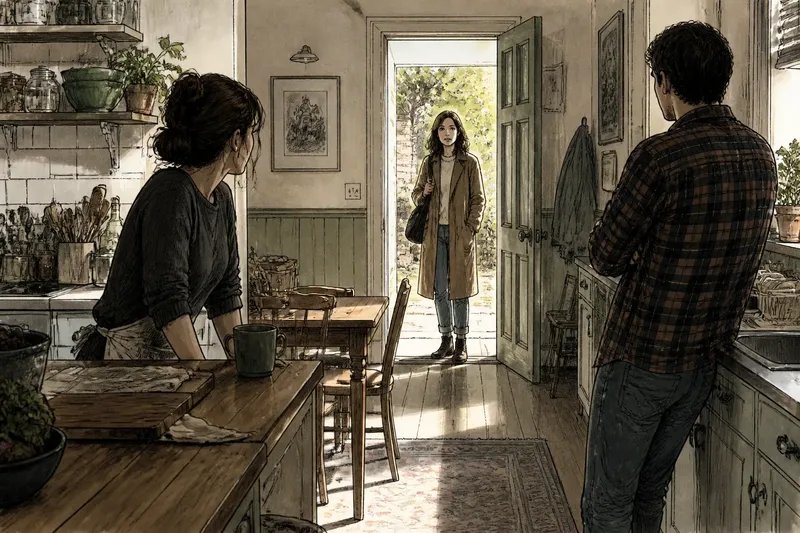
Listen for the cue’s entrance and exit. If music begins before a character opens a door, the threshold may feel charged before anything is visible. If the cue starts only after the door closes, the score can make the action seem settled—or suggest that its meaning is just beginning. The same music can produce a different effect when its timing changes.
Repetition can turn a musical detail into a story thread
A short motif—a recurring melody, rhythm, or cluster of notes—can connect moments that look unrelated. Its return may link a place to a memory, call back to an earlier choice, or make a later scene feel altered by what came before. The motif does not need to announce its meaning; the audience can recognize the pattern before knowing what to make of it.
Small changes matter. A motif might return with a missing note, a different instrument, or less space around it. Such a variation can make the repetition feel unsettled rather than reassuring. Notice what has changed in the image when the figure returns, but leave room for the pattern to remain ambiguous.
Silence can make the next sound feel newly important
Silence in a scored scene is rarely empty. Room tone, a refrigerator hum, footsteps, fabric, or a performer’s breath can take the foreground when the music stops. The absence of score can expose the texture of a place and make a small sound carry more weight.
That contrast gives filmmakers another way to shape a transition. A cue might drop out before a difficult line, leaving the performer’s voice unprotected, or enter after the line to color its aftermath. Compare the soundscape just before and after the gap: the change can reveal whether the scene has become more intimate, more brittle, or simply more alert to its surroundings.
Music can shift attention without explaining a character
A cue can draw the eye toward a detail the dialogue barely acknowledges. A repeated note might accompany a glance, or a familiar melodic shape might return as the camera passes an object. This does not certify a hidden motive. It gives the viewer a reason to notice a detail and consider how it belongs to the scene.
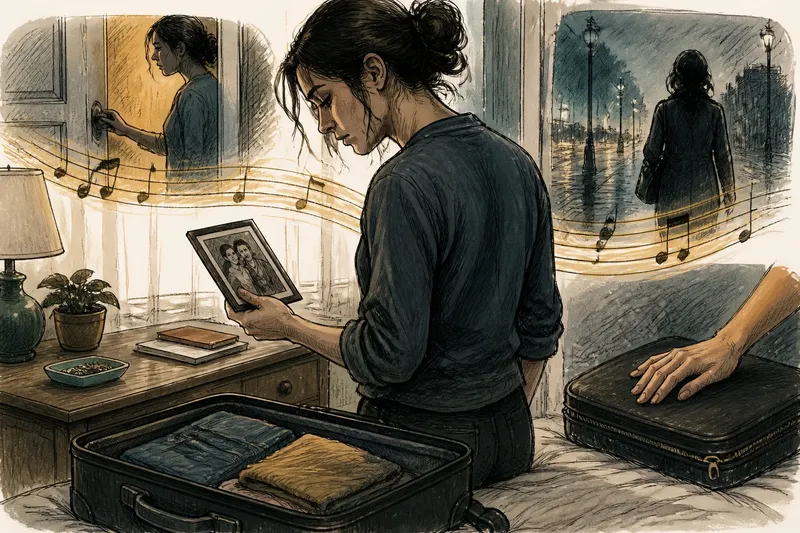
Imagine a scene where Mara packs a suitcase while discussing a routine errand. Each time she looks at a photograph on the dresser, the same three-note figure returns. On a first pass, the suitcase may seem to organize the scene; after the motif recurs, the photograph may feel like the detail worth tracking. The score has shifted attention, but it has not settled what Mara feels or why she is leaving.
How can you hear what the score changes?
What should I listen for when music enters?
Notice what the image is doing just before the cue begins: a gesture, a cut, a line, or a change in the room’s sound. Then listen for whether the music arrives ahead of that event, alongside it, or after it.
How does a recurring motif affect a scene?
A motif links moments through repetition, while changes in its melody, rhythm, or instrumentation can make the connection feel different each time. Track what is present in the image when it returns, without treating the association as a fixed explanation.
Why does a scene feel different when the music stops?
Without the score, room tone, movement, and breath become easier to hear. The shift can make a performance feel exposed or bring attention to the physical space around it.
Can a score point to a detail without telling me what it means?
Yes. A musical entrance or repeated figure can make a glance, object, or pause stand out while leaving its significance open. Treat the cue as an invitation to look, not as a verdict about the character.
Choose a musical approach by following the scene’s pressure points
When shaping a scene, identify where its attention changes: a door opens, a performer hesitates, a familiar object enters the frame, or a conversation breaks off. Decide whether music should prepare that change, follow it, or stay away so another sound can carry it.
- If a pause feels too brief to register, try a sustained note; if it makes the moment feel overemphasized, shorten the cue or let the room tone hold the silence.
- If a recurring motif connects two scenes too neatly, vary its rhythm or instrumentation; if the connection becomes hard to hear, bring back a recognizable part of the original figure.
- If dialogue already explains the emotional turn, hold music back; if the scene’s important shift happens in a glance or gesture, let a restrained cue meet that moment.
- If a musical entrance competes with a sound effect, move the cue away from the effect; if the two sounds work together, keep their overlap intentional and clear.
- If a cue makes a troubling action feel comic by accident, alter its timing or musical character; if that uneasy comedy is the intended effect, preserve the contrast.
- If silence leaves the scene feeling physically present, keep the gap; if it obscures an important transition, bring the score in at the moment the scene changes.
Say you are cutting a scene in which Mara finds a photograph while packing. The starting materials are a shot of her hand pausing over the frame, a line about an errand, and a suitcase closing nearby. First, place the musical figure only under the suitcase action: the practical task becomes the clearest focus, but the photograph risks reading as decoration. Next, move the figure to her pause over the frame: attention shifts toward the image, though the music may make the moment feel too decisive. Finally, leave the pause unscored and bring the figure in as she resumes packing. The resulting tradeoff is clear: the photograph stays noticeable without the cue declaring what Mara feels, while the return to action preserves uncertainty about her choice.
Background music is most revealing when you hear not only its mood but its timing, repetition, and effect on attention. Follow one cue from entrance to exit, then listen to the same passage without it if you can. That comparison can show which details belong to the image and which the score has quietly brought forward.